

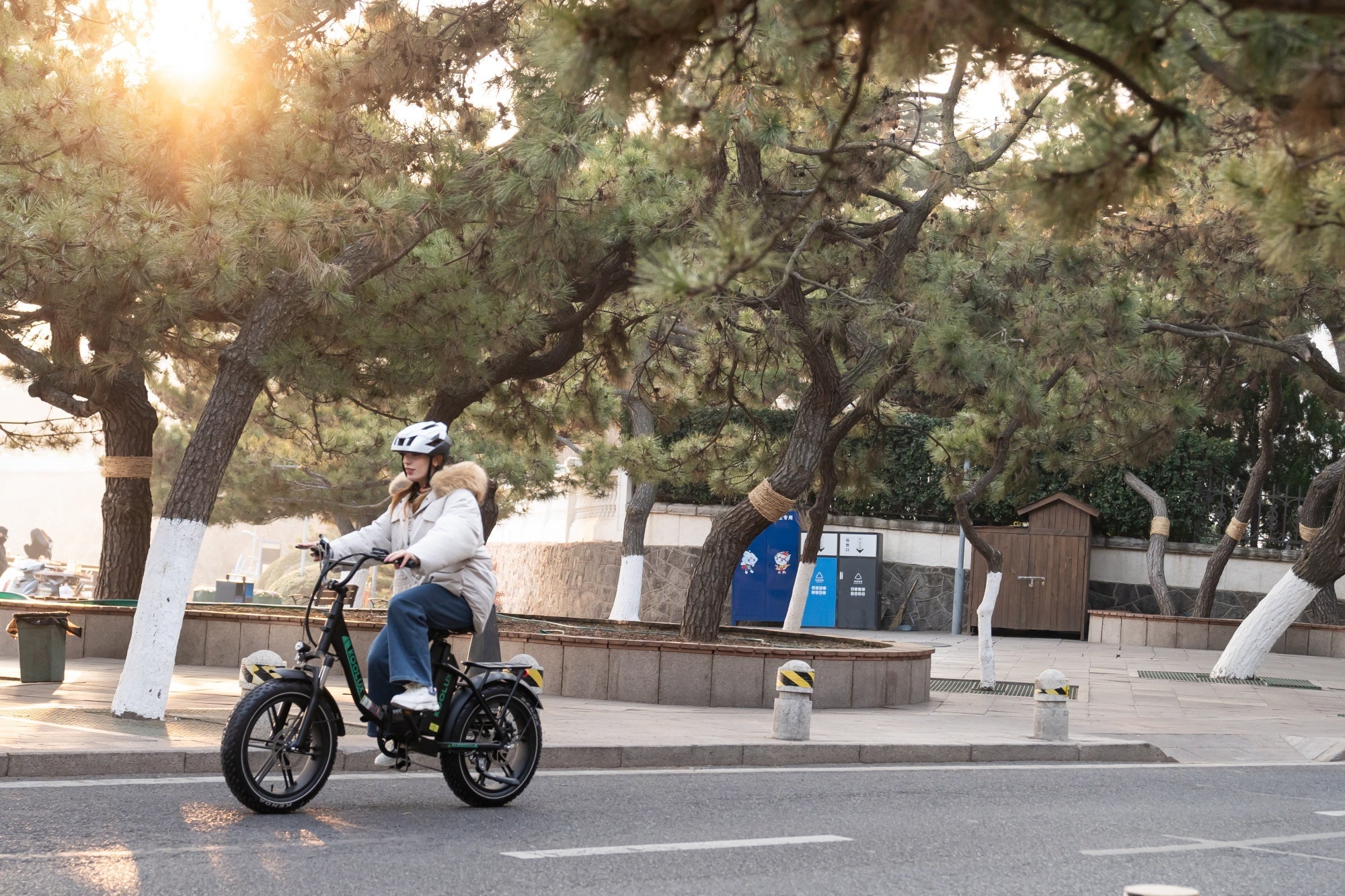
Chapter 1: The Tectonic Shift in European Urbanism (2025–2027)
As we enter the 2025–2027 cycle, the European continent is no longer just "experimenting" with electric mobility; it is mandating it. Driven by the EU Green Deal and the Urban Mobility Framework, major capitals from Paris to Warsaw are aggressively implementing "Zonal Access Controls" (ZACs). For the average resident, this means that driving an internal combustion engine (ICE) vehicle into the city center is becoming not only socially frowned upon but financially prohibitive.
The "15-Minute City" is no longer a theory. In cities like Barcelona (Superblocks) and Milan (Open Streets), urban planning now prioritizes "active travel" over private car ownership. This creates a massive market opportunity for vehicles that occupy the space between a bicycle and a car. This is the "Koolux Zone."
Over the next three years, we expect to see three major macro-trends:
-
Direct Government Subsidization: Countries like Germany (BAFA grants) and France (Bonus Vélo) are shifting subsidies away from electric cars—which still contribute to congestion—and toward electric cargo bikes.
-
Micromobility Infrastructure: The "Cycle Highway" networks (like the RS1 in Germany) are expanding, allowing cargo bikes to maintain a consistent 25km/h speed without stopping for traffic lights, making the "commute by Koolux" faster than the "commute by car."
-
The Professionalization of Last-Mile Delivery: With the rise of ultra-fast delivery, the demand for heavy-duty, high-payload bikes for commercial use is set to triple.
Chapter 2: The Koolux Engineering Philosophy — Built for the European Reality
Why does a Koolux bike stand out in a saturated market? It comes down to European-Specific Engineering. Most e-bikes are designed for leisure; Koolux is designed for utility and survival in the urban jungle.
2.1 The Frame: 6061 Aluminum and Stress-Tested Geometry
A standard e-bike frame is designed for a 100kg load. A Koolux Cargo frame is a different beast entirely. We utilize Aviation-grade 6061 Aluminum Alloy, which undergoes a T6 heat treatment process. This increases tensile strength while maintaining enough flexibility to absorb the vibrations of historic European cobblestone streets.
In our 2025 models, we have lowered the center of gravity by an additional 15mm. While this sounds minor, it significantly improves "low-speed stability"—the moment when you are balancing two children on the back while waiting for a green light. This is the difference between a bike that feels "tippy" and a Koolux that feels like it’s on rails.
2.2 The Powerplant: Torque vs. Speed
In Europe, speed is capped at 25km/h for legal e-bikes. Therefore, the "horsepower race" is actually a "Torque Race." Koolux motors are specifically tuned for High-Torque Output (up to 95Nm in premium models).
Why does this matter?
-
The "Stop-and-Go" Efficiency: In a city like London or Rome, you stop every 200 meters. Accelerating a 200kg total load from 0 to 25km/h requires massive torque.
-
The Hilly City Solution: For users in hilly regions like Lisbon or Stuttgart, torque is what prevents you from arriving at work drenched in sweat. Koolux's intelligent torque sensors sample your pedal input 1,000 times per second, providing a "seamless assist" that feels like an invisible hand pushing you forward.
2.3 Battery Safety and the "Dual-Battery" Ecosystem
Range anxiety is the #1 reason consumers hesitate to buy an e-bike. Koolux is solving this through our Modular Battery Architecture. Our 2025-2027 roadmap includes the standard integration of Samsung and LG high-capacity cells, managed by a proprietary BMS (Battery Management System).
Our BMS is specifically optimized for European climates. Traditional lithium batteries lose up to 30% efficiency when the temperature drops below 5°C. The Koolux "Thermal Shield" technology minimizes this loss, ensuring that your winter commute is just as reliable as your summer ride. Furthermore, our "Dual-Battery Ready" frames allow users to double their range to 160km (100 miles), making the bike capable of a full week of school runs on a single charge.

Chapter 3: The Koolux Product Lineup — Specialized Tools for a Car-Free Lifestyle
To truly replace a car, a bike must be more than just a frame with a motor; it must be a modular platform. At Koolux.eu, we have categorized our engineering efforts into three distinct "Utility Archetypes" designed to dominate the European streets over the next three years.
3.1 The Koolux "Heavy-Duty" Longtail: The Agile School-Bus
For the average European family living in high-density areas like Berlin’s Prenzlauer Berg or Paris’s Le Marais, space is the ultimate luxury. The Koolux Longtail Series is our answer to the "SUV problem." It maintains a standard bicycle width, allowing it to filter through stopped traffic and fit into standard bike racks, yet it possesses a reinforced rear subframe capable of carrying 70kg of dynamic load.
In 2025, we are introducing the "Aero-Shield" Integrated Rain Tent. Unlike universal covers that catch the wind and make handling difficult, the Koolux system is wind-tunnel tested to ensure stability even in the gusty coastal winds of the Netherlands or Northern Germany. By using a 20-inch rear wheel, we have lowered the center of gravity for the passengers, ensuring that even if your kids are restless, the bike remains rock-solid.
3.2 The Koolux "Bakfiets" Front-Loader: The Logistics Disruptor
While the longtail is for agility, the Koolux Front-Loader is for volume. For 2025-2027, this model is targeting the "Last-Mile Delivery" sector and large families. The front box is not just a container; it is an engineered safety cell.
We utilize high-impact EPP (Expanded Polypropylene)—the same material used in automotive bumpers—to create a lightweight yet incredibly strong basin. This material provides natural insulation, making it the perfect vehicle for local grocery delivery services or for keeping your children warm during a snowy January commute in Oslo or Zurich. The steering utilizes a dual-cable system, providing a much tighter turning radius than traditional rod-steering cargo bikes, making it surprisingly nimble in narrow medieval alleyways.
3.3 Modular Accessories: The "Koolux Adapt" System
The future of cargo bikes is modularity. Our "Koolux Adapt" ecosystem allows the user to switch the bike’s personality in under five minutes.
-
The Commuter Mode: Sleek, low-profile panniers for office gear.
-
The Family Mode: Padded benches, safety rails (the "Monkey Bar" system), and footrests.
-
The Cargo Mode: Heavy-duty flatbeds or lockable hard-shell boxes for professional tools.
This versatility ensures that a Koolux bike remains relevant for 10+ years, adapting as your children grow or as your business expands.
Chapter 4: The "Car-Killer" Economics — A 3-Year Price-Performance Analysis
When analyzing "Koolux vs high-end cargo bikes" or "e-bike vs car costs," the numbers for 2025-2027 are startling. As the cost of ICE (Internal Combustion Engine) vehicle ownership rises due to carbon taxes and fuel volatility, the "Koolux ROI" becomes undeniable.
4.1 Direct Cost Comparison (The 36-Month Model)
Let’s compare a mid-sized European hatchback (like a VW Golf or Renault Clio) to a fully-specced Koolux Electric Cargo Bike.
-
Purchase/Depreciation: A car loses 30% of its value the moment it leaves the lot. A Koolux bike, due to its high-quality components (Bosch/Shimano/Samsung) and the booming second-hand market in Europe, retains up to 70% of its value after three years.
-
Fuel vs. Electricity: To travel 1,000 km, a car requires approximately €120 in fuel. A Koolux bike requires approximately €1.50 in electricity.
-
Parking & Fines: In cities like Amsterdam or Paris, residential parking permits and daily parking can exceed €2,000 per year. For a Koolux bike, parking is €0.
-
Insurance & Taxes: Mandatory car insurance and road taxes in the EU average €1,200 annually. E-bike insurance is optional and significantly cheaper (approx. €150/year).
The Bottom Line: Over a 3-year period, replacing your second car with a Koolux bike saves the average European household between €14,000 and €18,000. This is enough to pay for the bike four times over.
4.2 The "Social ROI" — Time and Health
The "Hidden ROI" is time. In peak-hour traffic in London or Brussels, the average speed of a car is 12 km/h. A Koolux bike, utilizing dedicated bike lanes, maintains a steady 25 km/h. Over a year, the average commuter saves 120 hours—five full days of their life—simply by not being stuck in traffic.
Chapter 5: Navigating the European Subsidy Landscape (2025–2027)
One of the greatest opportunities in the current market is the "Subsidy Synergy." Europe is currently the most generous region in the world for e-bike incentives. At Koolux.eu, we assist our customers in navigating these complex bureaucratic systems.
5.1 Germany: The BAFA and Regional "Lastenrad" Grants
Germany remains the powerhouse of e-cargo bike adoption.
-
Commercial Use: The BAFA (Federal Office for Economic Affairs and Export Control) offers up to 25% of the purchase price (up to €2,500) for businesses and NGOs.
-
Private Use: Cities like Munich, Berlin, and Heidelberg have their own "Förderprogramme" that offer between €500 and €1,500 for families.
Koolux bikes are fully compliant with the "Lastenrad" definition, ensuring our customers qualify for the maximum possible rebate.
5.2 France: The "Bonus Vélo" and Scrappage Schemes
The French government has linked e-bike subsidies to "car scrapping." If you trade in an old, polluting car for a Koolux cargo bike, you may be eligible for a grant of up to €4,000. This "Plan Vélo" is part of a €2 billion investment to make France a leading cycling nation by 2027.
5.3 Italy and the Netherlands: Tax Deductions
In the Netherlands, the "WKR" (Work Costs Scheme) allows employers to provide e-bikes to employees as a tax-free benefit. In Italy, the "Bonus Bici" continues to fluctuate but remains a strong driver in Milan and Rome, offering up to €500 for urban commuters.

Chapter 6: Reliability and Sustainability — Maintenance for the European Winter
To be a true car replacement, a bike must work in December, not just in July. "Electric bike maintenance tips for European winters" is one of the most searched longtail keywords for a reason. Koolux has engineered its bikes and escooters to thrive in adverse conditions.
6.1 Winterizing Your Koolux
The European winter presents two enemies: Cold and Salt.
-
Battery Care: As mentioned in Chapter 2, our Thermal Shield technology protects the cells. We recommend customers store their batteries indoors when temperatures drop below 0°C.
-
Corrosion Resistance: Road salt is the enemy of any vehicle. Koolux uses KMC Rust-Buster chains and stainless steel hardware as standard. We recommend a monthly "Winter Wash" using our specialized eco-friendly lubricants to ensure the drivetrain remains silent and efficient.
-
Hydraulic Fluid Integrity: We use mineral oil in our hydraulic brake systems, which maintains a consistent viscosity even in sub-zero temperatures, ensuring that your stopping power is never compromised.
6.2 The Circular Economy: Battery Recycling and Longevity
At Koolux.eu, we take "Green" seriously. Our batteries are designed to be "Refurbishable." Instead of throwing away a whole unit, our service centers can replace individual faulty cells, significantly extending the lifecycle of the product. By 2027, we aim to have a 100% "closed-loop" recycling program for all lithium components sold in Europe.
Chapter 7: Conclusion — Why the Time is Now
The window of opportunity for the "Early Adopter Advantage" is closing as e-bikes move into the mainstream. By 2027, we predict that the electric cargo bike will be the standard urban vehicle, and the current generous subsidies may begin to phase out as targets are met.
Investing in a Koolux today is not just about buying a bicycle. It is about:
-
Securing your mobility in an era of car-free city centers.
-
Protecting your finances from the rising costs of fossil fuels.
-
Investing in your health and your children's future.
The Future of Europe is quiet, clean, and incredibly efficient. At Koolux.eu, we are proud to provide the tools for this transition. Visit our showroom or our website today to book a test ride and feel the torque of the future.
Share:
Which Electric Cargo Bike Should You Buy? Top Recommendations for Every Budget and Need