

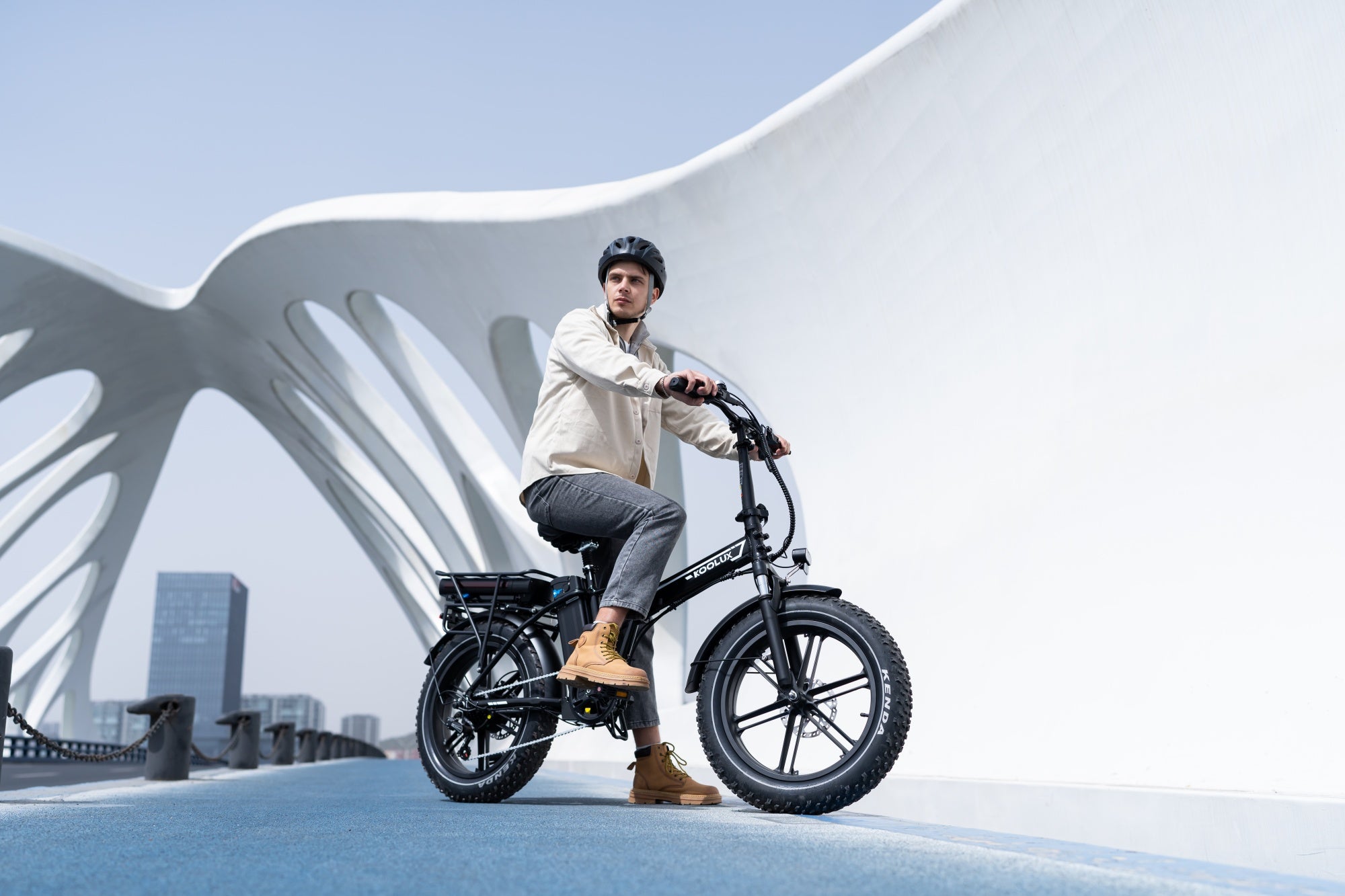
Introduction : Le boom du vélo électrique et la confusion réglementaire
Ces dernières années, les vélos électriques (VAE) ont déclenché une révolution mondiale en matière de mobilité personnelle, grâce à leur nature écologique, pratique et efficace. Des déplacements urbains animés aux promenades tranquilles à la campagne, les vélos électriques sont de plus en plus courants.
Cependant, avec leur popularité croissante, une question fondamentale se pose et déroute de nombreux utilisateurs potentiels et cyclistes actuels : Faut-il un permis pour un vélo électrique ? La réponse n'est pas simple ; elle dépend largement de votre situation géographique, du type de vélo électrique que vous utilisez et des réglementations locales.
Pour beaucoup, les vélos électriques se situent dans une zone grise entre les vélos traditionnels et les motos, ce qui entraîne une confusion concernant les permis, l'immatriculation, l'assurance et même les endroits où ils peuvent être utilisés.
Cet article vise à fournir un guide mondial complet et fiable pour 2026 sur la réglementation des vélos électriques, en se concentrant sur des régions clés telles que les États-Unis, le Royaume-Uni et l'Union européenne.
Nous examinerons les normes de classification, les exigences en matière de permis, les restrictions d'âge, les obligations de port du casque et d'autres dispositions légales cruciales dans différents pays et régions.
À la fin de ce guide, vous aurez une compréhension claire de la façon de déterminer si votre vélo électrique est conforme aux lois locales, vous permettant de profiter d'une conduite sûre et légale tout en évitant les risques juridiques inutiles.
Nous discuterons également de la manière d'améliorer la visibilité et l'expérience utilisateur d'un tel contenu approfondi grâce à l'optimisation technique du référencement, à l'intégration naturelle de mots-clés et à la mise en place d'une structure de liens internes et externes faisant autorité, prouvant ainsi sa valeur informationnelle.
Qu'est-ce qu'un vélo électrique légal ? Définitions et classifications de base
Avant de discuter de la nécessité d'un permis pour un vélo électrique, il est essentiel de définir ce qui constitue un « vélo électrique légal ». Bien que les réglementations varient considérablement dans le monde, elles s'articulent généralement autour de plusieurs paramètres de base pour définir le statut juridique d'un vélo électrique, le distinguant des vélos traditionnels ou des véhicules motorisés. Ces paramètres de base incluent généralement : la puissance du moteur, la vitesse maximale assistée et la présence d'une fonction d'assistance au pédalage.
Normes générales et limites légales
La plupart des pays et des régions classent les vélos électriques répondant à des normes spécifiques comme des « vélos » plutôt que des « véhicules à moteur ». Cette classification signifie généralement qu'ils peuvent bénéficier des mêmes droits routiers que les vélos traditionnels et qu'ils ne nécessitent pas de permis, d'immatriculation ou d'assurance. Ces normes incluent généralement :
•Limite de puissance du moteur : Généralement 250 watts (W) ou 750 watts (W). Les véhicules dépassant cette puissance peuvent être classés comme des cyclomoteurs ou des motos.
•Limite de vitesse maximale assistée : Généralement 25 km/h (environ 15,5 mph) ou 32 km/h (environ 20 mph). L'assistance motorisée doit cesser une fois cette vitesse atteinte.
•Exigence d'assistance au pédalage : De nombreuses réglementations stipulent que l'assistance motorisée ne doit s'engager que lorsque le cycliste pédale. Les véhicules uniquement entraînés par une manette d'accélérateur peuvent être classés comme des véhicules à moteur.
Ces limitations visent à garantir que les vélos électriques ne présentent pas de risque excessif pour les autres usagers de la route en termes de vitesse et de puissance, leur permettant de s'intégrer dans l'infrastructure cyclable existante. Si un vélo électrique dépasse ces paramètres, il peut être reclassé comme un cyclomoteur, une moto ou un autre type de véhicule à moteur.
Cette reclassification le soumettrait alors à des réglementations plus strictes, notamment : la possession d'un permis de conduire, l'immatriculation du véhicule, l'assurance obligatoire et le port de casques spécifiques. Par conséquent, comprendre les paramètres spécifiques de votre vélo électrique ou de celui que vous prévoyez d'acheter, et les confronter aux réglementations locales, est la première étape pour garantir une conduite légale.
L'importance de la classification des vélos électriques
La classification des vélos électriques est une mesure cruciale adoptée par les gouvernements du monde entier pour concilier les méthodes de transport innovantes et la sécurité publique. Une classification claire fournit des directives aux fabricants en matière de conception et de production, une base aux consommateurs en matière d'achat et d'utilisation, et des normes aux forces de l'ordre en matière de gestion et d'application. Ce mécanisme de classification contribue à :
•Assurer la sécurité routière : En limitant la vitesse et la puissance des vélos électriques, le risque d'accidents est réduit.
•Clarifier les droits de circulation : Distinguer les vélos électriques des véhicules motorisés leur permet d'utiliser de manière appropriée les pistes cyclables et les infrastructures.
•Simplifier les processus administratifs : Pour les vélos électriques qui répondent aux normes de vélo, les procédures complexes de permis et d'immatriculation sont supprimées, encourageant ainsi le transport écologique.
Dans les sections suivantes, nous explorerons en détail comment les principales régions telles que les États-Unis, le Royaume-Uni et l'Union européenne définissent le statut juridique et les exigences en matière de permis pour les vélos électriques à travers leurs systèmes de classification respectifs.
Analyse approfondie de la réglementation américaine sur les vélos électriques : le système à trois classes
Les États-Unis utilisent un système unique à trois classes pour gérer les vélos électriques, conçu pour les différencier par la puissance et la vitesse, et pour établir les réglementations correspondantes.
La plupart des États ont adopté cette norme de classification, ce qui signifie que la majorité des vélos électriques à basse vitesse ne nécessitent pas de permis, d'immatriculation ou d'assurance, et bénéficient des mêmes droits de circulation que les vélos traditionnels . Cependant, des différences subtiles existent entre les États, et les cyclistes doivent consulter les réglementations locales spécifiques.
Classe 1 (vélos électriques à assistance au pédalage)
•Définition : Fournit une assistance motorisée uniquement lorsque le cycliste pédale, la puissance du moteur ne dépassant généralement pas 750 watts (W).
•Vitesse maximale : L'assistance motorisée cesse à 20 mph (environ 32 km/h).
•Permis de conduire requis : Généralement aucun permis n'est requis. Les vélos électriques de classe 1 sont traités comme des vélos traditionnels et peuvent être utilisés sur toutes les routes, pistes cyclables et sentiers où les vélos traditionnels sont autorisés.
•Restriction d'âge : Certains États peuvent avoir une limite d'âge minimale, mais elle est généralement basse.
Classe 2 (vélos électriques à assistance par accélérateur)
•Définition : Équipé d'un accélérateur en plus de l'assistance au pédalage, permettant aux cyclistes d'engager le moteur indépendamment sans pédaler. La puissance du moteur ne dépasse généralement pas 750 watts (W).
•Vitesse maximale : L'assistance motorisée cesse à 20 mph (environ 32 km/h), que ce soit par assistance au pédalage ou par accélérateur.
•Permis de conduire requis : Aucun permis n'est requis dans la plupart des États. Les vélos électriques de classe 2 sont également traités comme des vélos traditionnels et bénéficient de droits de circulation similaires. Cependant, en raison de leur fonction d'accélérateur, certaines localités peuvent imposer des restrictions à leur utilisation, comme l'interdiction du mode accélérateur sur certaines pistes cyclables.
Classe 3 (vélos électriques à assistance au pédalage à grande vitesse)
•Définition : Fournit une assistance motorisée uniquement lorsque le cycliste pédale, avec une puissance moteur ne dépassant généralement pas 750 watts (W).
•Vitesse maximale : L'assistance motorisée cesse à 28 mph (environ 45 km/h).
•Permis de conduire requis : Aucun permis n'est toujours requis dans la plupart des États. Cependant, en raison de leur vitesse plus élevée, les vélos électriques de classe 3 sont souvent soumis à des réglementations plus strictes.
•Exigence de casque : De nombreux États exigent le port du casque pour les cyclistes de vélos électriques de classe 3, en particulier pour les mineurs .
•Restriction d'âge : Exige généralement que les cyclistes aient 16 ans ou plus.
•Restrictions d'utilisation : Peut être interdit sur certaines pistes cyclables ou sentiers polyvalents, généralement réservé aux routes.
Différences entre États : Exemples de Californie et de New York (Mise à jour 2026)
Bien que les États américains adoptent généralement le système à trois classes, des différences significatives subsistent dans la mise en œuvre spécifique et les réglementations additionnelles. Comprendre ces différences est crucial pour éviter les risques juridiques.
Californie
La Californie est l'un des États avec les taux d'adoption de vélos électriques les plus élevés, et ses réglementations sont relativement complètes. En 2026, les réglementations californiennes sur les vélos électriques comprennent principalement :
•Permis et enregistrement : Les vélos électriques de classe 1, 2 et 3 ne nécessitent ni permis ni enregistrement.
•Restriction d'âge : Les cyclistes de vélos électriques de classe 3 doivent avoir 16 ans ou plus.
•Exigence de casque : Le port du casque est obligatoire pour les cyclistes de vélos électriques de classe 3.
•Nouvelles lois sur la sécurité (en vigueur le 1er janvier 2026) : Tous les vélos électriques doivent être équipés d'un réflecteur arrière rouge ou d'un feu arrière rouge, de jour comme de nuit. La Californie a également renforcé les restrictions sur les modifications des vélos électriques pour empêcher les configurations illégales à haute vitesse ou haute puissance.
•Lieux d'utilisation : Les vélos électriques de classe 1 et 2 peuvent généralement être utilisés sur toutes les routes et pistes cyclables où les vélos traditionnels sont autorisés. Les vélos électriques de classe 3 sont généralement limités aux routes et peuvent être interdits sur certaines pistes cyclables ou sentiers polyvalents.
New York
La réglementation des vélos électriques à New York a fait l'objet de plusieurs ajustements ces dernières années et est maintenant relativement claire :
•Permis et immatriculation : Les vélos électriques de classe 1, 2 et 3 ne nécessitent pas de permis ni d'immatriculation.
•Limite de vitesse : Les vélos électriques de classe 1 et 2 ont une vitesse assistée maximale de 32 km/h. Les vélos électriques de classe 3 ont une vitesse assistée maximale de 40 km/h (sur certaines rues de New York).
•Exigence de port du casque : Pour les vélos électriques de classe 3, les cyclistes âgés de 16 ans et plus doivent porter un casque à New York ; la réglementation peut varier ailleurs.
•Lieux d'utilisation : Les vélos électriques peuvent être utilisés sur les routes et les pistes cyclables où les vélos traditionnels sont autorisés. À New York, les vélos électriques de classe 3 peuvent être utilisés sur les rues où la limite de vitesse est de 40 km/h, mais peuvent être interdits sur certaines pistes cyclables.
Tableau 1 : Aperçu du système américain de vélos électriques à trois classes
|
Classe
|
Type d'assistance
|
Vitesse assistée max.
|
Permis requis
|
Casque requis (fréquent)
|
Restriction d'âge (fréquente)
|
Lieux d'utilisation (fréquents)
|
|
Classe 1
|
Assistance au pédalage
|
32 km/h
|
Non
|
Non
|
Non
|
Pistes cyclables, routes
|
|
Classe 2
|
Accélérateur + assistance au pédalage
|
32 km/h (20 mph)
|
Non
|
Non
|
Non
|
Pistes cyclables, routes
|
|
Classe 3
|
Assistance au pédalage
|
45 km/h (28 mph)
|
Non
|
Obligatoire (certains États)
|
16+ (certains États)
|
Routes (restrictions de pistes cyclables possibles)
|
Vélos électriques « hors catégorie » : la zone grise légale
Tout vélo électrique qui dépasse les paramètres du système à trois classes, comme ceux dont la puissance du moteur est supérieure à 750 watts ou dont la vitesse maximale assistée dépasse 45 km/h, n'est généralement plus considéré comme un « vélo électrique ». Ces vélos électriques « hors catégorie » peuvent être classés comme cyclomoteurs, motos ou autres types de véhicules à moteur. Dans de tels cas, les cyclistes peuvent avoir besoin :
•Permis de classe M1 ou M2 : Semblable à un permis moto.
•Immatriculation du véhicule et plaque d'immatriculation : Nécessaire pour s'immatriculer auprès du DMV et afficher une plaque d'immatriculation.
•Assurance obligatoire : Doit souscrire une assurance automobile.
•Casque certifié DOT : Doit porter un casque conforme aux normes du ministère des Transports (DOT).
Par conséquent, lors de l'achat d'un vélo électrique, il est crucial de vérifier attentivement ses spécifications par rapport aux normes de classification locales, en particulier pour les modèles annoncés avec des « moteurs puissants » ou des « vitesses ultra-élevées ». Autrement, vous pourriez enfreindre involontairement les lois de la circulation et faire face à des amendes ou à des conséquences juridiques plus graves.
Réglementations britanniques relatives aux vélos électriques : normes EAPC expliquées
Les réglementations britanniques relatives aux vélos électriques sont relativement uniformes, adhérant principalement aux normes des « Cycles à Pédalage Assisté Électriquement » (EAPC). Si votre vélo électrique répond à la définition d'un EAPC, il sera traité comme un vélo ordinaire, ne nécessitant ni permis, ni immatriculation, ni assurance .
Définition de l'EAPC (cycles à pédalage assisté électriquement)
Pour être qualifié d'EAPC au Royaume-Uni, un vélo électrique doit satisfaire toutes les conditions suivantes:
•Puissance nominale continue maximale : La puissance nominale continue maximale du moteur électrique ne doit pas dépasser 250 watts (W).
•Assistance au pédalage : L'assistance moteur ne doit s'enclencher que lorsque le cycliste pédale. Dès que le cycliste cesse de pédaler, l'assistance moteur doit cesser immédiatement.
•Vitesse maximale assistée : L'assistance moteur doit se couper lorsque le véhicule atteint 25 km/h (environ 15,5 mph). Au-delà de cette vitesse, le véhicule doit être propulsé uniquement par le pédalage du cycliste.
•Poids du véhicule : Il n'y a généralement pas de limites de poids strictes, mais il doit se situer dans la portée raisonnable d'un « vélo ».
•Pédales : Le véhicule doit être équipé de pédales fonctionnelles.
Permis, immatriculation et assurance : exemptions pour les véhicules conformes aux normes EAPC
Si votre vélo électrique est entièrement conforme aux normes EAPC mentionnées ci-dessus, il bénéficiera du même statut juridique qu'un vélo traditionnel, ce qui signifie :
•Pas de permis requis : Les cyclistes n'ont pas besoin de détenir un permis de conduire.
•Pas d'immatriculation requise : Le véhicule n'a pas besoin d'être immatriculé auprès des autorités gouvernementales ni d'afficher une plaque d'immatriculation.
•Pas d'assurance obligatoire : Aucune assurance responsabilité civile obligatoire n'est requise (bien qu'une assurance accidents personnels et vol soit conseillée).
Règles relatives à l'accélérateur : Réglementations spécifiques au Royaume-Uni
Le Royaume-Uni applique des restrictions très spécifiques aux accélérateurs de vélos électriques, différant de celles de certains vélos électriques de Classe 2 aux États-Unis. Au Royaume-Uni, si un vélo électrique est équipé d'un accélérateur, il ne peut fournir une assistance que lorsque le véhicule est à vitesse de marche (environ 6 km/h ou 3,7 mph) . Ce type d'accélérateur est souvent appelé fonction « assistance à la marche », conçue pour aider les cyclistes à pousser le vélo avec moins d'effort. Si un vélo électrique peut être propulsé indépendamment par l'accélérateur à des vitesses supérieures au pas, il ne sera plus considéré comme un EAPC et pourra être reclassé comme un cyclomoteur, nécessitant ainsi un permis, une immatriculation et une assurance.
Restriction d'âge
Au Royaume-Uni, l'âge minimum pour conduire un vélo électrique (EAPC) est de 14 ans. Les enfants de moins de 14 ans ne sont pas autorisés à conduire des vélos électriques sur les routes publiques, même si le véhicule est conforme aux normes EAPC.
Tableau 2 : Aperçu de la réglementation britannique sur les vélos électriques EAPC
|
Caractéristique
|
Exigence
|
|
Puissance maximale continue du moteur
|
250W
|
|
Vitesse maximale assistée
|
25 km/h (15,5 mph)
|
|
Type d'assistance
|
Assistance au pédalage uniquement (accélérateur limité à la vitesse de marche)
|
|
Permis Requis
|
Non
|
|
Immatriculation Requise
|
Non
|
|
Assurance Obligatoire
|
Non
|
|
Restriction d'âge
|
14 ans et plus
|
|
Port du Casque Obligatoire
|
Non obligatoire (fortement recommandé)
|
Réglementations européennes pour les vélos électriques : Pedelec vs. S-Pedelec
Les États membres de l'UE maintiennent un degré élevé de cohérence dans les réglementations relatives aux vélos électriques, principalement basées sur la directive européenne 2002/24/CE (désormais remplacée par le règlement UE n° 168/2013) concernant la « réception des véhicules à deux ou trois roues ». L'UE classe les vélos électriques en deux catégories principales : les vélos électriques standard (Pedelec) et les vélos électriques rapides (S-Pedelec), qui présentent des différences significatives en termes de statut juridique et d'exigences .
Pedelec (vélo électrique standard)
•Définition : Les Pedelec sont le type de vélo électrique le plus courant et sont traités comme des vélos traditionnels. Ils doivent remplir les conditions suivantes :
•Puissance nominale continue maximale : La puissance nominale continue maximale du moteur électrique ne doit pas dépasser 250 watts (W).
•Assistance au pédalage : L'assistance moteur ne doit s'enclencher que lorsque le cycliste pédale.
•Vitesse d'assistance maximale : L'assistance moteur doit se couper lorsque le véhicule atteint 25 km/h.
•Permis, Immatriculation, Assurance : Si un vélo électrique est entièrement conforme aux normes Pedelec, aucun permis, immatriculation ou assurance obligatoire n'est généralement requis dans les États membres de l'UE. Les cyclistes peuvent circuler librement sur les pistes cyclables et les routes, comme avec un vélo traditionnel.
•Restriction d'âge : Il n'y a généralement pas de limite d'âge minimale unifiée, mais les pays peuvent avoir leurs propres réglementations.
•Port du casque : Le port du casque n'est généralement pas obligatoire mais est fortement recommandé.
S-Pedelec (vélo électrique rapide)
•Définition : Les S-Pedelec, ou « Speed Pedelecs », sont des vélos électriques plus rapides avec une assistance moteur allant jusqu'à 45 km/h. Ils ont généralement une puissance moteur plus élevée, jusqu'à 4 000 watts (W).
•Classification : Les S-Pedelecs sont classés dans l'UE comme des cyclomoteurs de catégorie L1e-B, et non comme des vélos. Cela signifie qu'ils doivent se conformer à des réglementations plus strictes en matière de véhicules à moteur.
•Permis Requis : La conduite d'un S-Pedelec nécessite un permis de catégorie AM (permis cyclomoteur) ou un permis de catégorie B (permis voiture).
•Immatriculation et Plaque d'Immatriculation : Les S-Pedelecs doivent être immatriculés et afficher une plaque d'immatriculation.
•Assurance Obligatoire : Une assurance responsabilité civile obligatoire doit être souscrite.
•Exigence de Casque : La conduite d'un S-Pedelec exige le port d'un casque conforme aux normes motocyclistes.
•Restriction d'Âge : Généralement, les conducteurs doivent être âgés de 16 ans ou plus.
•Lieux d'Utilisation : Les S-Pedelecs ne sont généralement pas autorisés sur les pistes cyclables et doivent être conduits sur les routes, en respectant les mêmes règles de circulation que les cyclomoteurs.
Variations entre États membres
Bien que l'UE fournisse un cadre unifié, les États membres individuels peuvent encore avoir des différences subtiles dans les détails de mise en œuvre, tels que les restrictions sur l'utilisation spécifique des routes, les normes spécifiques de casque ou les exigences d'âge minimum. Par conséquent, lorsque vous conduisez un vélo électrique au sein de l'UE, il est toujours préférable de consulter les réglementations nationales spécifiques en matière de circulation.
Tableau 3 : Aperçu du système de classification des vélos électriques de l'UE
|
Caractéristique
|
Pedelec (Vélo électrique ordinaire)
|
S-Pedelec (Vélo électrique rapide)
|
|
Classification
|
Vélo
|
Cyclomoteur L1e-B
|
|
Puissance maximale continue du moteur
|
250W
|
Jusqu'à 4000W
|
|
Vitesse maximale assistée
|
25 km/h
|
45 km/h
|
45 km/h
|
|
Type d'assistance
|
Assistance au pédalage uniquement
|
Assistance au pédalage
|
|
Permis requis
|
Non
|
Permis de classe AM ou B
|
|
Immatriculation et plaque
|
Non
|
Immatriculation et plaque obligatoires
|
|
Assurance obligatoire
|
Non
|
Achat obligatoire
|
|
Casque obligatoire
|
Non obligatoire (recommandé)
|
Obligatoire (norme moto)
|
|
Restriction d'âge
|
Varie selon les pays (pas d'uniformisation)
|
16 ans et plus
|
|
Lieux d'utilisation |
Pistes cyclables, routes
|
Routes (pistes cyclables interdites)
|
Aperçu de l'Asie et d'autres régions
La réglementation des vélos électriques en Asie et dans d'autres régions présente une diversité encore plus grande, les pays formulant des règles différentes en fonction de leurs conditions de circulation, de leurs infrastructures et de leurs contextes culturels. Bien qu'il soit impossible de détailler chaque pays, la tendance générale est que les vélos électriques de faible puissance et à faible vitesse avec assistance au pédalage ne nécessitent généralement pas de permis ni d'immatriculation. En revanche, les modèles plus performants sont soumis à une réglementation plus stricte en matière de véhicules à moteur .
•Chine : En tant que plus grand marché mondial du vélo électrique, la Chine a des réglementations strictesdu « Nouveau Standard National » (新国标), exigeant que la puissance du moteur ne dépasse pas 400 W, une vitesse maximale de 25 km/h et une fonction de pédalage obligatoire. Les vélos électriques respectant ces normes sont classés comme véhicules non motorisés et ne nécessitent pas de permis. Les véhicules dépassant ces normes peuvent être considérés comme des cyclomoteurs électriques ou des motos électriques, nécessitant un permis, une immatriculation et une assurance.
•Inde : Similaire à l'UE, les vélos électriques avec une puissance moteur inférieure à 250 W et une vitesse maximale de 25 km/h ne nécessitent généralement pas de permis. Les véhicules dépassant ces normes sont considérés comme des véhicules à moteur.
•Japon : Le Japon a des réglementations très strictes, avec des règles claires sur le rapport d'assistance moteur pour les vélos électriques, et l'assistance au pédalage est obligatoire. Tout véhicule avec une poignée d'accélérateur ou dépassant le rapport d'assistance peut être classé comme une moto, nécessitant un permis et une immatriculation.
•Moyen-Orient (par exemple, Émirats Arabes Unis, Arabie Saoudite) : Ces régions connaissent une popularité croissante des vélos électriques, et la réglementation s'aligne généralement sur les normes de l'UE (250W, 25 km/h, assistance au pédalage). Les véhicules conformes ne nécessitent pas de permis. Cependant, le port du casque et les réglementations spécifiques des zones de circulation peuvent varier.
En résumé, quel que soit l'endroit, le principe fondamental demeure : les vélos électriques de moindre puissance, de moindre vitesse et nécessitant davantage l'assistance au pédalage humain sont généralement soumis à moins de restrictions légales ; inversement, les vélos électriques de plus grande puissance, de plus grande vitesse et ayant une plus grande capacité d'auto-propulsion sont plus susceptibles d'être classés comme véhicules à moteur, nécessitant ainsi un permis, une immatriculation et une assurance.
Comment déterminer si votre vélo électrique est légal ?
Naviguer dans le paysage complexe des réglementations mondiales en matière de vélos électriques peut être source de confusion pour les cyclistes. Pour vous aider à déterminer rapidement si votre vélo électrique est conforme aux exigences légales locales, voici une liste de contrôle concise. Veuillez noter qu'il s'agit de conseils généraux, et vous devriez toujours consulter le site web officiel du service de gestion du trafic ou des professionnels du droit dans votre région spécifique (pays, état/province, ville) .
Liste de contrôle pour la légalité des vélos électriques :
1.Puissance du moteur : Quelle est la puissance nominale continue maximale du moteur de votre vélo électrique ? Dépasse-t-elle la limite locale (par exemple, 250W, 750W) ?
2.Vitesse maximale assistée : Quelle est la vitesse maximale que votre vélo électrique peut atteindre avec l'assistance du moteur ? Dépasse-t-elle la limite locale (par exemple, 25 km/h, 32 km/h, 45 km/h) ?
3.Type d'assistance : Votre vélo électrique est-il purement à assistance au pédalage, à assistance par accélérateur (peut être conduit sans pédaler), ou les deux ? L'assistance par accélérateur est-elle limitée à la vitesse de marche ?
4.Pédales : Votre vélo électrique est-il équipé de pédales fonctionnelles ?
5.Classification du véhicule : Sur la base des paramètres ci-dessus, comment votre vélo électrique est-il classifié localement (par exemple, Classe 1/2/3 aux États-Unis, EAPC au Royaume-Uni, Pedelec/S-Pedelec dans l'UE) ?
6.Exigence de permis : Votre classification exige-t-elle un permis de conduire ?
7.Immatriculation et plaque d'immatriculation : Votre véhicule doit-il être immatriculé et afficher une plaque d'immatriculation ?
8.Exigence d'assurance : Une assurance responsabilité civile obligatoire est-elle requise ?
9.Exigence de casque : Le port du casque est-il obligatoire pour votre classification et votre groupe d'âge ?
10.Restriction d'âge : Respectez-vous l'âge minimum requis pour conduire ce type de vélo électrique ?
11.Lieux d'utilisation : Sur quelles routes, pistes cyclables ou sentiers votre vélo électrique peut-il être utilisé ? Y a-t-il des zones interdites ?
Si votre vélo électrique dépasse la définition locale d'un « vélo » à l'un de ces égards, il est fort probable qu'il soit considéré comme un véhicule motorisé, nécessitant ainsi la conformité à des réglementations plus strictes. L'approche la plus sûre consiste à examiner attentivement les spécifications du produit du fabricant et à les croiser avec les lois locales sur la circulation avant d'acheter et d'utiliser un vélo électrique.
Optimisation de l'expérience utilisateur et de la valeur du contenu
Au-delà de la fourniture d'informations précises et fiables, un article de blog approfondi de haute qualité doit également prioriser l'expérience utilisateur pour garantir que sa valeur est efficacement transmise et reconnue. Les signaux positifs de l'expérience utilisateur, tels que le temps de séjour et le taux de clics (CTR), sont des indicateurs cruciaux pour les moteurs de recherche afin d'évaluer la qualité et la pertinence du contenu. Pour ce faire, nous optimiserons les domaines suivants :
1. Profondeur et lisibilité du contenu
•Structure claire : Utiliser des titres de chapitre et des sous-titres logiquement divisés, permettant aux utilisateurs de parcourir rapidement et de trouver les informations souhaitées. Cet article utilise des modules tels que l'introduction, les définitions de base, l'analyse régionale approfondie, la liste de contrôle et la conclusion pour créer un chemin de lecture clair.
•Explication des termes techniques : Fournir de brèves explications pour les termes techniques comme « E-E-A-T », « Pedelec » et « S-Pedelec » dès leur première apparition, afin que les lecteurs non spécialistes puissent également comprendre.
•Assistance par tableau : Utiliser des tableaux (comme les tableaux récapitulatifs des réglementations américaines, britanniques et européennes dans cet article) pour comparer visuellement des informations complexes, améliorant ainsi la lisibilité et l'efficacité d'absorption des informations.
•Langage naturel : Éviter le jargon rigide et trop technique, et présenter les informations dans un langage fluide et naturel tout en conservant professionnalisme et autorité.
2. Suggestions de configuration multimédia
Les éléments multimédias peuvent considérablement améliorer l'attrait du contenu et l'engagement des utilisateurs, augmentant efficacement le temps que les utilisateurs passent sur la page.
•Images :
•Infographies : Par exemple, une infographie comparant les paramètres clés des classifications américaines à trois classes, britanniques EAPC et européennes Pedelec/S-Pedelec peut présenter les différences réglementaires complexes en un coup d'œil.
•Diagrammes : Des diagrammes illustrant les classifications américaines de classe 1/2/3 (y compris les types de vitesse et d'assistance) peuvent aider les lecteurs à comprendre intuitivement les distinctions.
•Photos réelles : Inclure des photos de vélos électriques en cours d'utilisation avec des casques, ou des gros plans d'étiquettes de moteur de vélo électrique conformes, pour améliorer le réalisme et fournir une référence pratique.
•Vidéos :
•Vidéos explicatives sur la réglementation : Intégrer une courte vidéo présentant un expert expliquant la réglementation des vélos électriques, offrant une expérience d'apprentissage plus dynamique.
•Vidéos de conduite sécuritaire : Fournir des vidéos sur les techniques de conduite sécuritaire ou des guides d'ajustement de casque.
•Éléments interactifs : Envisager d'intégrer un outil en ligne simple qui permet aux utilisateurs de saisir leur emplacement et les paramètres de leur vélo électrique pour déterminer rapidement si un permis est requis.
3. Placement naturel des mots-clés et SEO technique
•Mots-clés principaux et de longue traîne : Intégrer naturellement les mots-clés principaux tels que « faut-il un permis pour un vélo électrique », « permis vélo électrique » dans les titres, les sous-titres, le paragraphe d'introduction et la conclusion. Simultanément, placer stratégiquement des mots-clés de longue traîne tout au long du contenu, tels que « lois vélo électrique par État », « permis vélo électrique classe 3 Californie », « loi accélérateur vélo électrique Royaume-Uni », pour couvrir un éventail plus large d'intentions de recherche.
•Balise de titre : Optimiser la balise <title> de la page pour inclure les mots-clés principaux et être attrayante, améliorant ainsi les taux de clics dans les résultats de recherche.
•Exemple : Faut-il un permis pour un vélo électrique ? Guide mondial 2026 – Lois, classifications et exigences
•Structure d'URL : Utiliser une URL concise, descriptive et riche en mots-clés, telle que /faut-il-permis-velo-electrique-guide-mondial-2026/.
•Données structurées (Schema Markup) :
•Schéma FAQPage : Pour les questions fréquentes abordées dans l'article, utiliser les données structurées FAQPage pour afficher le contenu sous forme d'extraits enrichis dans les résultats de recherche, améliorant ainsi la visibilité.
•Schéma HowTo : Pour la section « Comment déterminer si votre vélo électrique est légal ? », utilisez les données structurées HowTo pour guider les utilisateurs à travers des étapes spécifiques.
•Schéma Article : Fournissez des informations telles que la date de publication de l'article, l'auteur, le titre, la description et les images pour aider les moteurs de recherche à mieux comprendre le contenu.
4. Structure de liens internes et externes faisant autorité
•Liens internes : Insérez stratégiquement des liens vers d'autres articles pertinents sur le site (par exemple, « guide d'achat de vélos électriques », « conseils d'entretien de vélos électriques ») dans le texte. Cela encourage les utilisateurs à explorer davantage, augmente le temps passé sur le site et renforce l'autorité globale du site Web.
•Liens externes : Citez des sources externes faisant autorité, telles que les ministères des transports (DMV, Department for Transport), les associations industrielles (PeopleForBikes), les sites Web de conseils juridiques ou les rapports de presse officiels. Cela améliore non seulement le E-E-A-T (Expérience, Expertise, Autorité, Fiabilité) de l'article, mais fournit également aux lecteurs des pistes fiables pour des recherches supplémentaires. Tous les liens externes seront configurés pour s'ouvrir dans une nouvelle fenêtre afin d'éviter que les utilisateurs ne quittent la page actuelle.
5. Mises à jour régulières et fraîcheur du contenu
La réglementation des vélos électriques peut changer au fil du temps, ce qui rend crucial un examen et une mise à jour réguliers du contenu du blog. Nous veillerons à ce que l'année mentionnée dans l'article (par exemple, « Guide mondial 2026 ») reste à jour et que les informations pertinentes soient rapidement mises à jour en fonction des dernières révisions légales. Cela maintient non seulement l'exactitude et l'autorité du contenu, mais signale également aux moteurs de recherche que le contenu est actif, ce qui contribue à maintenir et à améliorer les classements de recherche.
Conclusion : Roulez en toute sécurité et légalement
Grâce à cette analyse approfondie, nous pouvons conclure que la plupart des vélos électriques répondant à des normes spécifiques ne nécessitent généralement pas de permis, d'immatriculation ou d'assurance obligatoire dans les principales régions du monde (États-Unis, Royaume-Uni, UE). Ces vélos électriques « légaux » sont traités comme des vélos traditionnels, dans le but d'encourager les transports respectueux de l'environnement et les modes de vie sains.
Cependant, si la puissance du moteur, la vitesse maximale assistée ou le type d'assistance d'un vélo électrique dépasse les limites fixées par la réglementation locale, il peut être reclassé comme véhicule à moteur, ce qui nécessiterait alors le respect de règles plus strictes, notamment la possession d'un permis de conduire, l'immatriculation du véhicule et une assurance obligatoire.
Comprendre et respecter la réglementation des vélos électriques dans votre région relève de la responsabilité de chaque cycliste. Lors de l'achat d'un vélo électrique, vérifiez attentivement ses spécifications par rapport aux lois locales ; lorsque vous roulez, portez toujours un casque (même s'il n'est pas obligatoire, il est fortement recommandé), respectez le code de la route et privilégiez la sécurité routière. En choisissant un vélo électrique conforme et en adoptant des habitudes de conduite responsables, vous pourrez profiter en toute sécurité, légalité et plaisir de la commodité et du plaisir qu'offrent les vélos électriques.
Partager:
Comment supprimer le limiteur de vitesse sur un scooter électrique : Un guide complet, légal et technique
Comment supprimer le limiteur de vitesse sur un scooter électrique : ce que vous devez savoir avant d'apporter des modifications