

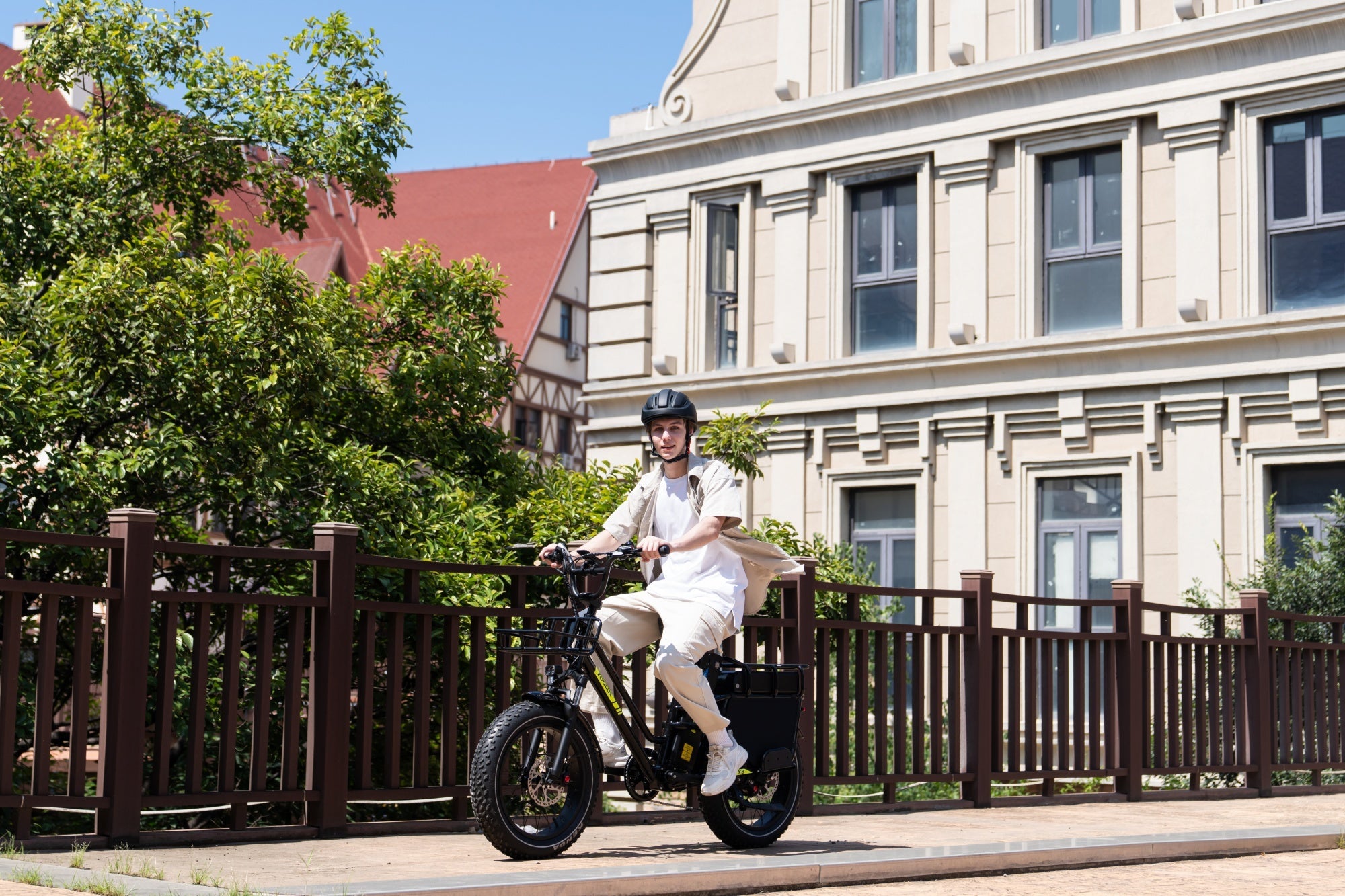
Poiché le bici cargo elettriche stanno diventando il veicolo preferito da famiglie e aziende, una domanda è in cima alla lista per ogni potenziale acquirente: quanto lontano può viaggiare una bici cargo elettrica?
Questa non è solo una questione di curiosità. È una questione di pianificazione pratica quotidiana. È necessario sapere se la tua bici è in grado di gestire il tragitto scolastico, un viaggio al supermercato, il tragitto per andare al lavoro e il ritorno a casa senza lasciarti a piedi con la batteria scarica.
La risposta breve è che la maggior parte delle moderne bici cargo elettriche può viaggiare da 30 a 100 km con una singola carica. Tuttavia, se si opta per un modello di fascia alta con un sistema a doppia batteria, l'autonomia può estendersi a oltre 160 km.
Ma come ti dirà qualsiasi proprietario di e-bike, l'autonomia dichiarata sulla scatola è raramente quella che si ottiene nel mondo reale. Poiché le bici cargo sono progettate per trasportare carichi pesanti, la loro autonomia è influenzata da più variabili rispetto a una e-bike da pendolare standard.
In questa guida completa, analizzeremo esattamente cosa determina l'autonomia di una bici cargo elettrica, come calcolare le tue esigenze specifiche e come ottenere il massimo da ogni carica.
Capire la base: Capacità della batteria (Wattora)
Per capire quanto lontano può andare la tua bici, devi prima capire il serbatoio del carburante. Nel mondo delle bici elettriche, il serbatoio del carburante è la batteria e la sua dimensione è misurata in Wattora (Wh).
Per trovare i Wattora di una bici, si moltiplica la tensione della batteria (V) per i suoi Ampere-ora (Ah). Ad esempio, una batteria da 48V con 14Ah ha una capacità di 672Wh.
Come regola generale, su una bici elettrica standard, ci si può aspettare di utilizzare circa 20 Wattora per miglio. Tuttavia, le bici cargo elettriche sono più pesanti e trasportano più peso. Pertanto, una stima realistica per una bici cargo è più vicina a 25-30 Wattora per miglio su terreno pianeggiante con un carico moderato.
Se la tua bici cargo ha una batteria standard da 500Wh, puoi aspettarti un'autonomia realistica di circa 24-32 km se utilizzi un alto livello di assistenza del motore. Se sei conservatore con la potenza, potresti spingerla a 40 o 48 km.
I 5 fattori principali che influenzano la tua autonomia
Non ci sono due corse uguali e la tua autonomia varierà notevolmente in base all'ambiente e a come usi la bici. Ecco i cinque fattori più importanti che determinano la tua autonomia nel mondo reale.
1. Peso totale del carico utile
Questo è il singolo fattore di differenza più grande tra una e-bike standard e una e-cargo bike. Le bici cargo sono progettate per trasportare carichi pesanti, spesso fino a 180 kg o più, incluso il ciclista.
Il motore deve lavorare molto più duramente per spostare 160 kg di ciclista e bambini di quanto non faccia per spostare un ciclista di 70 kg da solo. I carichi pesanti richiedono più coppia, che assorbe più corrente dalla batteria. Trasportare un carico completo può facilmente ridurre l'autonomia della batteria dal 30% al 50% rispetto a quando si guida la bici vuota.
2. Il terreno e le colline
La gravità è il più grande killer di batterie. Quando si sale una collina con una bici cargo completamente carica, il motore lavora alla sua massima capacità.
Una singola salita ripida durante il tragitto può scaricare la batteria tanto quanto diversi chilometri di guida in piano. Se vivi in una città molto collinare come San Francisco o Seattle, devi tenerne conto e cercare bici con batterie di maggiore capacità o motori a trazione centrale che utilizzano gli ingranaggi della bici per una migliore efficienza.
3. Livello di assistenza alla pedalata
La maggior parte delle bici cargo elettriche offre diversi livelli di assistenza alla pedalata, di solito che vanno da Eco (aiuto minimo) a Turbo o Boost (aiuto massimo).
Se guidi ovunque in modalità Turbo perché vuoi andare veloce e sudare il meno possibile, la tua autonomia sarà all'estremità inferiore dello spettro. Se sei disposto a mettere più potenza nelle gambe e mantenere la bici in modalità Eco o Tour, puoi facilmente raddoppiare la tua autonomia.
4. Vento e condizioni atmosferiche
Le biciclette non sono aerodinamiche, e le cargo bike lo sono ancora meno, specialmente quelle con carichi anteriori e grandi scatole o le longtail con coperture antipioggia.
Pedalare contro un forte vento contrario è funzionalmente come salire una collina continua. Costringe il motore a lavorare di più solo per mantenere la velocità. Inoltre, le batterie agli ioni di litio sono sensibili alla temperatura. Guidare in condizioni invernali gelide può ridurre l'efficienza della batteria fino al 20%.
5. Pressione degli pneumatici ed efficienza meccanica
Il modo in cui mantieni la tua bici gioca un ruolo subdolo ma significativo nell'autonomia. I pneumatici sgonfi creano un'alta resistenza al rotolamento, il che significa che il motore deve lottare solo per mantenere le ruote in movimento.
Mantenere gli pneumatici gonfi alla pressione consigliata può far risparmiare una quantità notevole di batteria. Allo stesso modo, una catena secca e sporca o freni che sfregano creeranno attrito che ruberà preziosi chilometri alla tua autonomia.
Il punto di svolta: sistemi a doppia batteria
Se guardi il tuo tragitto giornaliero e ti rendi conto che 30-50 km non sono sufficienti, non disperare. L'industria delle bici cargo ha risolto questo problema con i sistemi a doppia batteria.
Molte bici cargo elettriche di alta qualità offrono la possibilità di montare due batterie contemporaneamente. Il sistema informatico della bici preleva intelligentemente energia da entrambe le batterie, passando da una all'altra o scaricandole in modo uniforme.
Una configurazione a doppia batteria raddoppia efficacemente l'autonomia. Con due batterie da 500 Wh che ti danno un totale di 1.000 Wh, puoi aspettarti realisticamente un'autonomia di 80-130 km, anche con un carico pesante. Ciò rende la bici in grado di essere utilizzata per consegne commerciali per tutto il giorno o per epici viaggi turistici nel fine settimana.
Cosa succede quando la batteria si scarica?
Questa è la paura più grande del ciclista di e-cargo bike aspirante. Cosa succede se sono a cinque chilometri da casa con due bambini sul retro e la batteria arriva allo 0%?
La buona notizia è che la bici non si blocca o smette di funzionare. È ancora una bicicletta, e puoi ancora pedalarla.
La cattiva notizia è che le bici cargo elettriche sono pesanti. Senza l'assistenza del motore, una bici da 34 kg caricata con altri 45 kg di bambini e attrezzature è incredibilmente difficile da pedalare, specialmente se c'è una qualsiasi inclinazione.
Potrai muoverla su terreno pianeggiante, ma sarà un allenamento lento e pesante. Per evitarlo, la maggior parte dei display moderni sono altamente precisi. È buona norma pianificare i tuoi viaggi in modo da non scendere mai sotto il 10% di durata della batteria.
Come massimizzare l'autonomia della tua e-cargo bike
Se vuoi estendere la durata della tua batteria il più possibile, adotta queste abitudini di guida.
Usa le marce correttamente. Non fare affidamento sul motore per salire una collina con una marcia alta. Scala a una marcia bassa in modo che le tue gambe e il motore possano girare a una cadenza efficiente.
Inizia lentamente. Il motore utilizza la maggior parte dell'energia quando accelera da fermo. Se spingi forte con le gambe per le prime pedalate per mettere in movimento la bici prima che il motore si attivi, risparmierai molta energia.
Veleggia quando puoi. Impara a leggere la strada davanti a te. Se vedi un semaforo rosso in lontananza, smetti di pedalare e lascia che la bici veleggi invece di motorizzare fino al semaforo e frenare bruscamente.
Il verdetto sull'autonomia delle cargo bike
Quando ti chiedi "quanto può viaggiare una bici cargo elettrica", il passo più importante è mappare la tua vita quotidiana.
La maggior parte delle persone scopre che i loro viaggi giornalieri di andata e ritorno per la scuola, il lavoro e il negozio totalizzano meno di 24 km. Per questi utenti, una bici cargo standard a batteria singola è più che sufficiente, e dovranno caricarla solo ogni due o tre giorni.
Tuttavia, se hai un lungo tragitto pendolare, vivi in una zona molto collinare o prevedi di utilizzare la bici per consegne commerciali, è vivamente consigliato investire in un sistema a doppia batteria o in una bici con batteria ad alta capacità (700Wh o più).
La tranquillità di sapere di avere energia più che sufficiente per tornare a casa vale ogni centesimo.
Condividi:
Ho bisogno di una bici cargo elettrica? La guida definitiva al tuo prossimo grande investimento
Quanta strada percorre una bici cargo elettrica? La guida definitiva all'autonomia della batteria e all'efficienza