

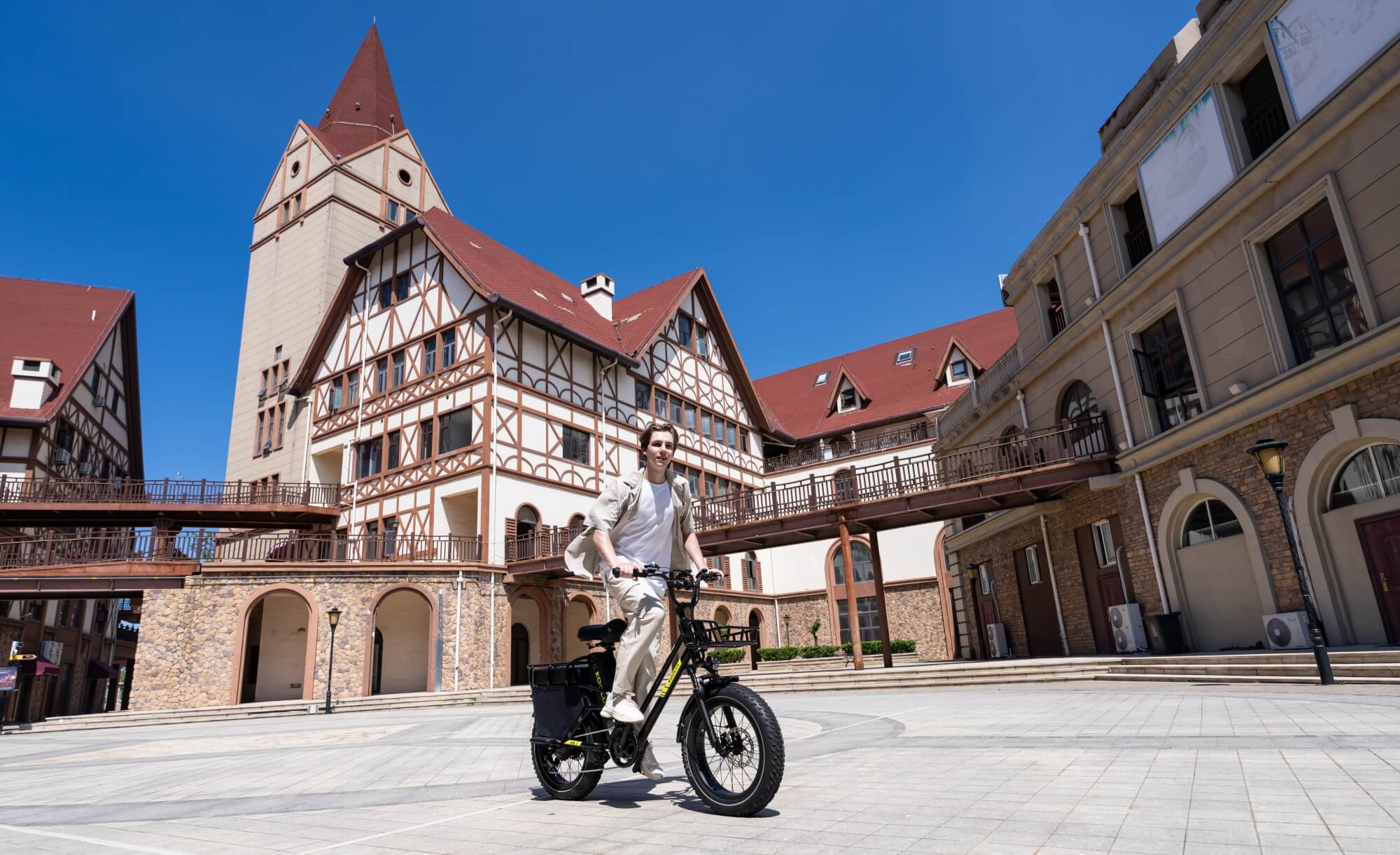
When people first see an electric cargo bike, the reaction is almost always the same: "Can that thing really carry all of that?" Whether it is a "longtail" bike loaded with three children or a "front-loader" filled with bags of soil and lumber, these bikes look like they are defying the laws of physics.
If you are considering buying one, the most important question you need to answer is: how much weight can an electric cargo bike hold?
Understanding weight capacity is not just about knowing if you can fit your groceries. It is about safety, legal compliance, and the longevity of the bike itself. Overloading a bike can lead to frame failure, broken spokes, or dangerous braking distances.
In this comprehensive guide, we will break down the technical limits of different cargo bike styles, explain the terminology manufacturers use, and provide practical tips for hauling heavy loads safely.
Understanding the "GVWR" (Gross Vehicle Weight Rating)
To understand weight capacity, you must first understand the most important acronym in the industry: GVWR. This stands for Gross Vehicle Weight Rating.
Many new riders make the mistake of thinking the "capacity" listed on a website refers only to the cargo. This is incorrect. The GVWR is the maximum total weight the bike is engineered to handle safely. This number includes:
-
The weight of the bike itself (including the battery and motor).
-
The weight of the rider.
-
The weight of all cargo, accessories, and passengers.
For example, if a bike has a GVWR of 440 pounds (200 kg), and the bike itself weighs 80 pounds while the rider weighs 180 pounds, you have 180 pounds of "payload" capacity left for kids or groceries. Always check if a manufacturer is listing the Payload Capacity or the Total GVWR to avoid overloading your ride.
Average Weight Limits by Bike Type
Not all cargo bikes are created equal. The design of the frame determines how much weight it can carry and how that weight affects the handling.
1. Longtail Electric Cargo Bikes
These are the most common type of cargo bikes. They look like a standard bicycle but have an extended rear rack.
-
Typical Capacity: Most high-quality longtails have a GVWR between 350 and 450 pounds.
-
Rear Rack Limit: The specific limit for the rear rack is usually between 120 and 200 pounds.
-
Best For: Carrying two older children, pannier bags full of groceries, or light hardware store runs.
2. Front-Loading Cargo Bikes (Bakfiets)
These bikes have a large box located between the rider and the front wheel. Because the cargo is sits lower to the ground, they can often handle more weight with better stability.
-
Typical Capacity: These often have a GVWR between 450 and 550 pounds.
-
Box Limit: The front box can usually hold 200 to 250 pounds.
-
Best For: Carrying young toddlers (in a protected box), pets, or very bulky items like crates of water or heavy tools.
3. Electric Cargo Trikes
With three wheels instead of two, trikes offer the ultimate in weight-bearing stability. They do not tip over when stopped, which is a major advantage for heavy loads.
-
Typical Capacity: Trikes can often handle 500 to 650 pounds total.
-
Best For: Heavy-duty commercial deliveries, riders with balance concerns, or carrying three or more children.
The Engineering Behind the Weight
You might wonder why a standard mountain bike is rated for only 250 pounds while a cargo bike can handle double that. It isn’t just a bigger frame; it is a total re-engineering of the bicycle's components.
Reinforced Frames: Cargo bike frames are usually made of thick-walled aluminum or chromoly steel. They feature extra gussets (reinforcement plates) at high-stress points like the head tube and the seat post junction.
Heavy-Duty Spokes and Rims: A standard bike wheel will "taco" or bend under 400 pounds. Cargo bikes use smaller wheels (often 20-inch in the rear) because smaller wheels are inherently stronger and stiffer. They also use thicker 12-gauge or 13-gauge spokes to prevent snapping under tension.
Hydraulic Disc Brakes: Stopping 400 pounds of moving metal and human requires massive friction. High-quality e-cargo bikes use 4-piston hydraulic disc brakes and oversized rotors (180mm or 203mm). These systems provide the "stopping power" necessary to bring a heavy load to a halt on a downhill slope.
High-Torque Motors: Carrying weight requires torque, not just speed. Cargo-specific motors (like the Bosch Cargo Line or high-torque hub motors) are tuned to help you get moving from a dead stop while carrying a full load.
The Importance of Weight Distribution
Knowing "how much" weight you can carry is only half the battle. You also need to know "where" to put it.
If you put 150 pounds of weight high up on a rear rack, the bike becomes "top-heavy." This makes it prone to tipping when you lean into a turn or when you are standing at a stoplight.
To haul weight safely, follow the "Low and Centered" rule. Try to keep the heaviest items as low to the ground as possible. On a longtail bike, this means using large pannier bags that sit low beside the wheel. On a front-loader, it means placing heavy groceries at the bottom of the box rather than on top of a seat.
Balance is also key. If you have a heavy bag on the left side of the bike and nothing on the right, the bike will pull in one direction, causing fatigue and making steering more difficult. Always try to distribute the weight evenly between the left and right sides of the bike.
Carrying Passengers: Safety First
For many, the "cargo" is the most precious thing in the world: their children. Most cargo bikes are specifically designed for this, but you must respect the seat limits.
A rear rack might be rated for 150 pounds, but that doesn't mean you can just have an adult sit on the bare metal. You need specialized accessories like "hoop" bars (to keep hands inside), footrests (to keep feet away from the spokes), and padded seats.
Always check the individual weight rating for child seats. Most Yepp or Thule seats are rated for up to 40-48 pounds. Once a child outgrows those, they should move to a "big kid" setup with a dedicated bench and safety rails.
How Weight Affects Performance
It is important to remember that as you approach the maximum weight limit, the bike’s performance will change significantly.
Reduced Range: As discussed in our previous guides, carrying more weight forces the motor to draw more current. If you are at the maximum GVWR, expect your battery range to drop by 40% or more.
Longer Braking Distances: Physics dictates that a heavier object takes longer to stop. When you are fully loaded, you must start braking much earlier than you would on a normal bike.
Steering Feel: Heavy loads can make the steering feel "sluggish" or heavy. This is especially true on front-loaders, where the weight is directly over the steering arm. It takes a few rides to build the muscle memory needed to handle a fully loaded bike with confidence.
Practical Tips for Heavy Hauling
If you are planning to push your bike to its weight limits, keep these tips in mind:
-
Check Tire Pressure: Under-inflated tires are dangerous under heavy loads. They can cause "pinch flats" or even allow the rim to hit the ground. Always pump your tires to the maximum recommended PSI listed on the sidewall before a big haul.
-
Use the Kickstand Wisely: Cargo bikes usually come with heavy-duty dual-leg kickstands (like a motorcycle). Always make sure the bike is on level ground before loading kids or heavy gear.
-
Shift Gears Early: Do not wait until you are struggling on a hill to shift. If you know you are carrying a heavy load, shift into a low gear before you stop or before the hill starts. This protects your chain and motor from excessive wear.
The Verdict: Can It Handle Your Life?
So, how much weight can an electric cargo bike hold? For most people living a standard urban lifestyle, the answer is more than enough.
Whether you are a parent with two growing kids or a DIY enthusiast hauling supplies from the hardware store, a bike with a 400-pound GVWR will cover 95% of your needs.
The electric cargo bike is a true feat of engineering. By respecting the weight limits and understanding the physics of your ride, you can safely transform your bike into a powerful, car-replacing machine that handles your heaviest loads with ease.
Share:
How Many Miles Can Electric Cargo Bike Travel? The Real-World Range Guide
What is an Electric Cargo Bike? The Complete Guide to the Future of Local Travel