

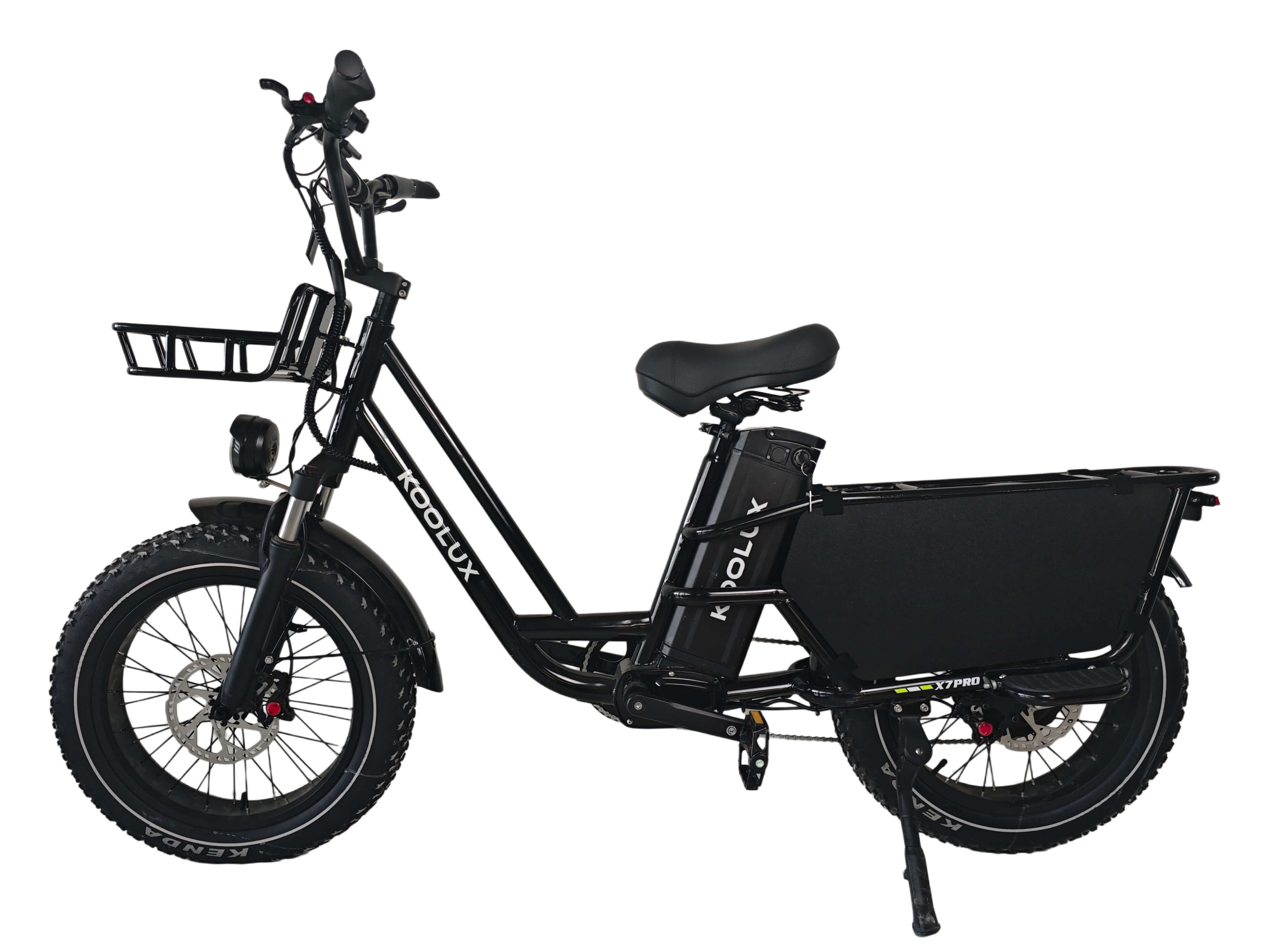
In the quest for more sustainable, efficient, and joyful ways to move through our cities, one vehicle has emerged as a clear frontrunner. It isn't a sleek electric sports car or a high-tech scooter. Instead, it is a modern reimagining of one of the world's oldest inventions: the bicycle. We are talking about the electric cargo bike.
To the uninitiated, an electric cargo bike might look like a regular bicycle that has been stretched or widened. However, for those who own one, it is much more than that. It is a "car replacement," a "mobile playroom," and a "delivery van" all rolled into one. If you have been seeing these long, sturdy-looking bikes zipping through your neighborhood and wondering exactly what they are and how they work, you are in the right place.
In this guide, we will break down the anatomy of an electric cargo bike, the different styles available, and the reasons why they are rapidly becoming the preferred mode of transport for urban dwellers worldwide.
Defining the Electric Cargo Bike
At its simplest level, an electric cargo bike is a heavy-duty bicycle specifically designed to carry large loads, passengers, or bulky items, equipped with an integrated electric motor to assist the rider.
While a traditional bicycle is designed to carry a rider and perhaps a small backpack, a cargo bike is engineered from the ground up to handle hundreds of pounds of payload. The "electric" part of the equation is the game-changer. Carrying 100 pounds of groceries or two growing children on a traditional bike is a grueling physical task. The electric motor provides "pedal assist," which multiplies the rider's effort and makes a fully loaded bike feel as light and nimble as a standard commuter cycle.
The Anatomy: What Makes It Different?
To understand what an electric cargo bike is, you have to look at how it differs from a standard e-bike. Every component is "beefed up" to handle the stresses of heavy hauling.
The frame is the foundation. Most cargo bikes use reinforced aluminum or chromoly steel frames with thicker walls and extra bracing. This prevents the frame from "flexing" or swaying when it is carrying a heavy load, which is vital for maintaining stability and control.
The wheels and tires are also specialized. Cargo bikes often use smaller, wider wheels (usually 20 inches in the rear) because smaller wheels are structurally stronger and have a lower center of gravity. The tires are puncture-resistant and designed to handle higher pressures to support the weight of the cargo.
Safety is paramount, so these bikes are almost always equipped with hydraulic disc brakes. These brakes provide consistent, powerful stopping power regardless of the weather or the weight of the load. They allow a rider to bring 400 pounds of moving mass to a complete stop safely on a downhill slope.
The Three Main Styles of Cargo Bikes
Not all cargo bikes look the same. Depending on what you need to carry, there are three primary designs that dominate the market.
1. The Longtail Bike
This is the most "bicycle-like" of the group. A longtail bike has an extended rear rack that sits over a stretched-out rear wheel. It handles very similarly to a standard bicycle, making it an easy transition for traditional cyclists. These are the "station wagons" of the bike world. They are perfect for carrying two children on the back or fitting large pannier bags for groceries.
2. The Front-Loader (or Bakfiets)
Originating in the Netherlands, the "Bakfiets" (which literally means "box bike") features a large wooden or plastic cargo box located between the handlebars and the front wheel. The steering is connected to the front wheel via a linkage rod. This design is the "minivan" of the cargo bike world. Because the cargo sits low to the ground, it is incredibly stable. It is the preferred choice for parents with young toddlers or dog owners who want to keep their pets in their line of sight.
3. The Mid-Tail Bike
A mid-tail is a more compact version of the longtail. It offers a slightly longer rack than a standard bike but is short enough to fit on some bus racks or be stored in smaller apartments. It is the "compact crossover" of the group—offering more utility than a regular bike without the footprint of a full cargo machine.
How the Electric Assist Works
The "magic" of the electric cargo bike lies in the drive system. Most high-quality cargo bikes use a "mid-drive" motor, which is located at the pedals (the bottom bracket). This allows the motor to take advantage of the bike's gears, providing maximum torque for climbing hills.
There are also "hub motor" cargo bikes, where the motor is located inside the wheel. These are often more affordable but may struggle more on very steep hills when fully loaded.
The rider controls the level of assist through a display on the handlebars. You can choose a low level of assist (Eco) to get a bit of exercise or a high level (Turbo) to let the motor do most of the work. Most cargo bikes also feature a "Walk Mode," which helps you push the heavy bike up a ramp or across a pedestrian-only zone without needing to pedal.
The "Why": Why Are People Buying Them?
The rise of the electric cargo bike is driven by a shift in how we think about urban living. For many, the car has become a burden in the city—stuck in traffic, impossible to park, and expensive to maintain.
Economic Freedom: Replacing a car with a cargo bike can save a household thousands of dollars a year. When you eliminate insurance, fuel, registration, and expensive repairs, the initial $3,000 to $6,000 investment for a cargo bike pays for itself very quickly.
The Ultimate Parenting Hack: Ask any parent who uses a cargo bike, and they will tell you it changed their life. The "school run" becomes an outdoor adventure. There is no fighting with car seats in a cramped backseat, and no sitting in the drop-off line. You can pull right up to the school gate, kiss your kids goodbye, and be on your way.
Environmental Impact: Transportation is a leading cause of carbon emissions. Replacing car trips with bike trips is the single most effective way an individual can reduce their carbon footprint. Cargo bikes make this possible even for "utilitarian" trips like buying groceries or moving furniture.
Health and Happiness: Riding an e-bike is still exercise. Studies have shown that e-bike riders often get more exercise over time because they ride more frequently and for longer distances than traditional cyclists. Furthermore, being out in the fresh air instead of trapped in a metal box significantly reduces stress and improves mental well-being.
Commercial and Business Use
It isn't just families making the switch. Businesses are discovering that electric cargo bikes are often the fastest way to deliver goods in congested city centers. Companies like DHL, Amazon, and local florists are using "cargo cycles" to navigate narrow streets and bypass traffic jams.
In many European cities, cargo bikes are now the primary vehicle for "last-mile" deliveries. They don't require a commercial driver's license, they don't get parking tickets, and they can deliver directly to the customer's door more efficiently than a traditional van.
Is an Electric Cargo Bike Right for You?
Understanding what an electric cargo bike is is the first step toward deciding if you need one. If your daily life exists within a five-to-ten-mile radius, and you find yourself frustrated by traffic and the costs of car ownership, a cargo bike is likely the solution you have been looking for.
It is a vehicle that combines the efficiency of a bicycle with the utility of a car. It is a machine that turns chores into fun and turns "travel time" into "quality time."
The electric cargo bike is not just a new type of bicycle; it is a new way to live in the world. It represents a future where our streets are quieter, our air is cleaner, and our communities are more connected. If you haven't tried one yet, find a local dealer and take a test ride. Once you feel that motor kick in while you are carrying a week's worth of life behind you, you will understand exactly why this revolution is here to stay.
Share:
How Much Weight Can an Electric Cargo Bike Hold? A Deep Dive into Payload and Safety
Which Electric Cargo Bike Should You Buy? Top Recommendations for Every Budget and Need